Crucial US midterm elections on November 3 will decide congressional control, shaping President Trump’s final two years in office.
US midterm elections approach
The United States is gearing up for crucial midterm elections on November 3, which will determine control of both chambers of Congress. These polls are set to send a decisive message to the White House regarding President Donald Trump’s performance, significantly shaping the final two years of his current term.
The stakes are particularly high for President Trump, aged 80, who risks being reduced to a “lame duck” if his Republican party loses control of Congress. Such a defeat would force him into a substantial struggle to preserve his legacy and defeat potential impeachment bids.
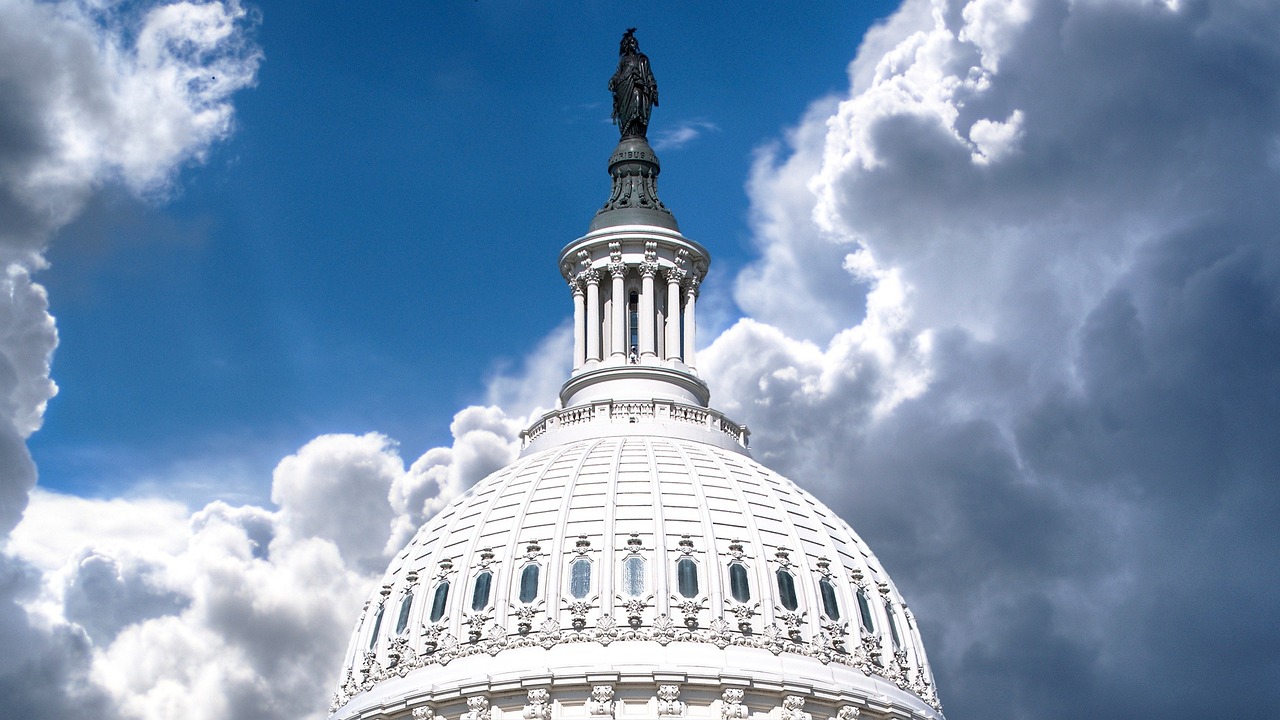
Congress, located in Washington DC’s Capitol building, consists of two parts. The lower chamber is the House of Representatives, where all 435 seats are contested in these midterms. The upper chamber is the Senate, where only 35 of the 100 seats will be decided due to staggered elections, making its control a tighter battle.
Key numbers in the battle for Congress
The upcoming November 3 midterm elections present several critical figures that will determine the balance of power in Washington. These numbers highlight the narrow margins and significant shifts anticipated by many observers across the country.
- All 435 seats in the House of Representatives are up for election.
- Only 35 of the 100 Senate seats will be decided in this election cycle.
- Democrats require a net gain of four seats to secure a majority in the House.
- Headline inflation is lower than in January 2025, but prices for household basics like coffee and minced beef have increased by nearly 20 per cent.
- Pollsters predict Democrats could gain between nine and 19 seats in the House, potentially securing a majority.
- If pre-election polls are off by just three points, Republicans could retain the Senate with a 52-48 majority, according to broadcaster CNN.
Trump’s 2024 promises and current challenges
President Trump’s current term, which began in January 2025, was launched on a platform of specific promises to the American people. He pledged to lower prices, secure the nation’s borders, and extricate the US military from what he termed “forever wars” in the Middle East. These commitments formed the core of his electoral appeal during his 2024 campaign.
However, nearly two years into his term, the reality presents a different picture. President Trump currently faces historically low approval ratings. A conflict with Iran, initially projected to last “four to six weeks,” has stretched into an “embarrassing stalemate” six months later, coinciding with record fuel prices at US pumps.
While overall inflation figures might be lower than when his term started, the cost of everyday goods has significantly impacted American households. Essential items such as coffee and minced beef have seen price hikes of nearly 20 per cent, leading to economic strain for many families across the country.

Democratic House win alters Trump’s power
A Democratic victory in the House of Representatives would immediately alter the political landscape for President Trump’s administration. Such a shift would grant Democrats control over the legislative agenda, allowing them to block spending initiatives proposed by the White House.
This power directly impacts the President’s ability to enact his policies and could stifle his domestic agenda.
Crucially, a Democratic majority would also mean heading the influential House Oversight and Judicial Committees. These committees possess extensive investigative powers, enabling them to summon witnesses and demand documents. They can even pursue legal action against those who obstruct their inquiries. The White House’s legal department is reportedly hiring staff in anticipation of such challenges, preparing for potential “hand-to-hand legal combat” over the next two years of Trump’s term.
Pollsters’ accuracy remains the key question
The most pressing question surrounding the upcoming midterms is whether the pollsters, who have a chequered history, will accurately predict the results this time. Their past failures in significant elections, including the 2016 and 2024 presidential races, cast a shadow over current projections and leave much uncertainty.
- Will the predicted “Blue Wave” of Democratic victories materialise, or will Republican ground efforts prove more effective than surveys suggest?
- Can the Democratic party overcome internal ideological divisions and the controversies surrounding some of its candidates in key battleground states?
Repeated polling failures for Trump
The current uncertainty around midterm polling reflects a consistent challenge faced by voter survey companies in recent US election cycles. Pollsters have repeatedly underestimated the support for Donald Trump, particularly among his white and male voter base. This pattern was evident in the 2016, 2020, and 2024 presidential elections, where final results often diverged from pre-election forecasts.
Despite promises to refine their methods, there is little evidence to suggest fundamental changes have occurred since these past inaccuracies. This raises questions about whether current projections, which largely favour Democrats, truly capture the sentiment of all voters, especially in rural and southern America where Trump’s support often exceeds expectations.

A weakened president could escalate global actions
Should President Trump lose significant domestic power in the midterms, it is plausible his administration could pivot towards an even more assertive, and potentially disruptive, foreign policy.
A president feeling “neutered at home” might seek to reassert relevance on the global stage, leading to unpredictable international actions. The recent easing of Western pressure on Vladimir Putin, involving a deal to purchase diesel, could be an early indicator of this approach.
This strategy, driven by a desire to maintain influence, risks further destabilising international relations. While some might argue a weakened president has less capacity for global action, the opposite could be true: with less to lose domestically, the incentives for bold, even reckless, foreign policy moves increase. A “lame duck” president might feel unbound by conventional diplomatic constraints, making his final acts particularly volatile.
Key races to follow on November 3
As November 3 approaches, several states will be crucial in determining the final balance of power in both the House and Senate. The outcomes in these specific races could swing control of Congress and dictate the legislative agenda for the next two years.
- Senate: Georgia, Michigan, and New Hampshire are must-holds for Democrats. Maine, North and South Carolina, Ohio, Texas, Alaska, Iowa, and Kansas are key flip opportunities.
- House: Battleground races are concentrated in Arizona, Pennsylvania, Wisconsin, Alaska, Michigan, New Hampshire, and Texas.
- Specific Candidates: Watch Ken Paxton and James Talarico in Texas; Abdul El-Sayed in Michigan; Troy Jackson in New Hampshire; and the three-way race in Alaska involving the two Sullivans and Mary Peltola.