Violent confrontations erupted in A Coruña, injuring 15 people, as demonstrators protested a Vox party rally ahead of November’s elections.
A Coruña clashes injure 15 people
Clashes broke out in A Coruña, a port city in Galicia, on Wednesday 21 October, leaving 12 police officers and three protesters injured. The unrest occurred during a rally for Santiago Abascal, leader of Spain’s right-wing Vox party.
Around 5,000 demonstrators had gathered in María Pita Square to protest Vox’s proposals ahead of the November 29 elections. Tensions escalated after Abascal’s speech, with protesters throwing eggs at a security cordon. Shouts of “Galicia will be the tomb of fascism” were heard.
Police charged the crowd, injuring two young people, one of whom was arrested. A second police charge followed as protesters hurled stones. Footage showed riot police surrounded by masked individuals throwing chairs.
The protesters eventually retreated as police advanced towards the Church of San Jorge. Later that day, a second protest formed, with over 1,000 people clashing again with riot police. They lit flares and built barricades of burning furniture.
A Coruña City Council condemned the violence. Mayor Inés Rey stated that any demand loses legitimacy when violence is used, innocent people are attacked, or private property is damaged.
agitators from far-Left fringe groups, joined by numerous criminals.
Injuries and arrests in A Coruña
The recent unrest in A Coruña resulted in multiple injuries and arrests, highlighting the volatile nature of political demonstrations.
- 12 police officers and 3 protesters were injured on Wednesday 21 October.
- Around 5,000 people initially gathered to protest the Vox party.
- Two individuals were arrested on suspicion of “assault and public disorder.”
- A second protest involved over 1,000 people, leading to further clashes.
Vox party’s rise in Spanish politics
The Vox party, led by Santiago Abascal, represents a significant force on Spain’s political right. Its rallies frequently draw both supporters and counter-protesters, often leading to confrontations.
The party’s platform, which includes strong nationalist and conservative stances, has resonated with a segment of the Spanish electorate. However, it also provokes strong opposition from left-wing groups, as seen in the A Coruña incident.

Political polarisation fuels public unrest
The A Coruña clashes demonstrate how deeply entrenched political divisions are translating into physical confrontation on the streets. This escalation of violence threatens the peaceful conduct of democratic processes, particularly during an election period.
When political discourse descends into public disorder, it can deter citizens from engaging in legitimate protest or even attending rallies. The condemnation from Mayor Inés Rey underscores the concern that violence undermines the very demands protesters seek to make.
Echoes of recent French riots
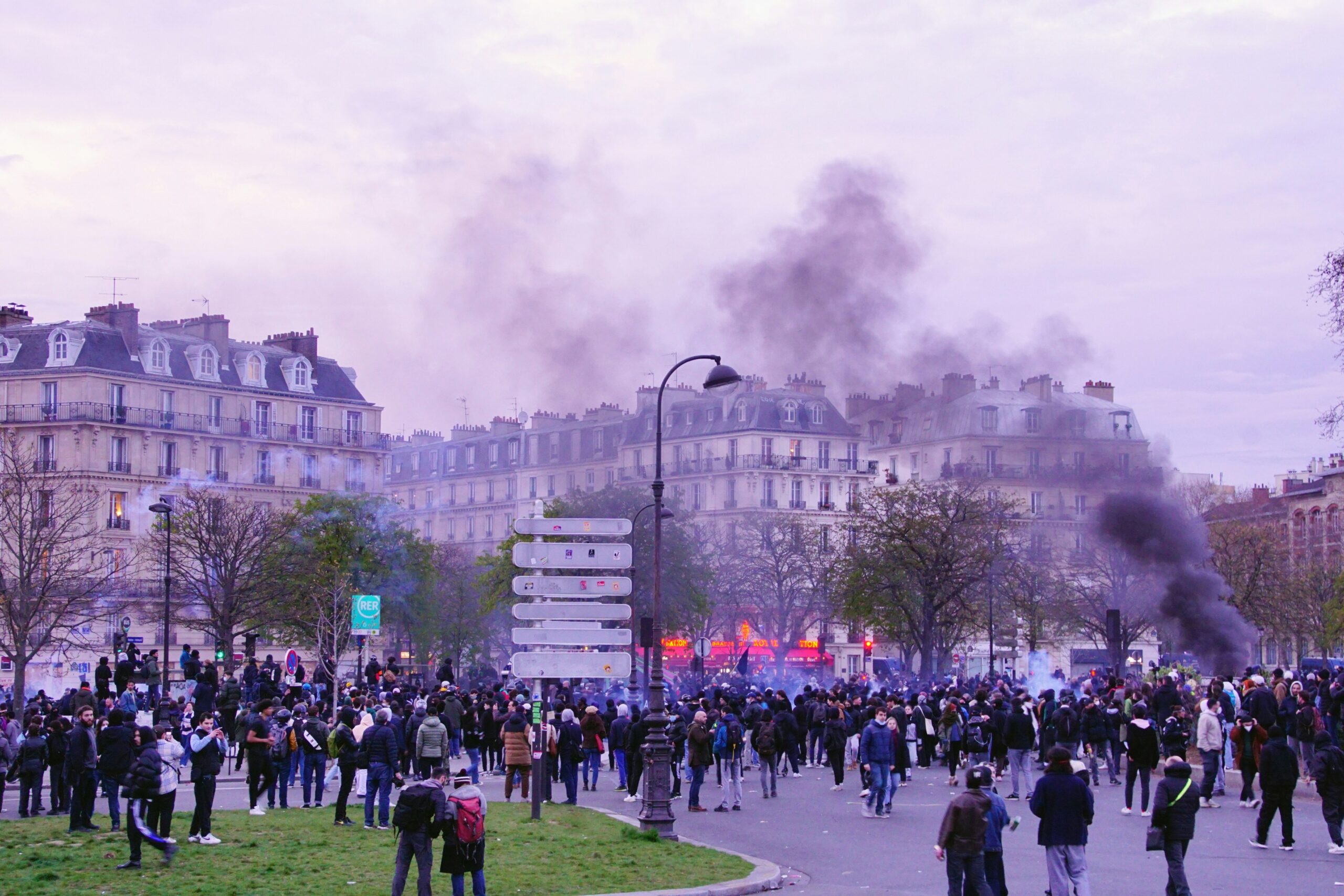
The violence in A Coruña follows closely on the heels of widespread unrest in France, which occurred over the weekend of 17-18 October. French cities, including Paris, Limoges, Marseille, and Lyon, experienced significant destruction.
During the French riots, cars were set alight, shops were ransacked, and a historic town hall was destroyed. French President Emmanuel Macron attributed the chaos to “agitators from far-Left fringe groups, joined by numerous criminals.” Police admitted losing control of major cities.
These events, though distinct in their immediate triggers, point to a broader European pattern. Public frustration and political polarisation are increasingly manifesting as violent street protests. The Gilet Jaunes movement in France, which previously caused chaos at the start of President Macron’s term, is now calling for new demonstrations.
What next for Spanish elections?
The most pressing question is how these violent confrontations will influence the upcoming November 29 elections in Spain.
- Will the clashes galvanise support for Vox, or will they alienate voters concerned about public order?
- How will the A Coruña City Council and national authorities respond to prevent further escalation?
- What impact will the arrests have on future protest movements in the region?
Escalating confrontation threatens Spanish democracy
The scenes of violence in A Coruña are a worrying sign for Spain’s democratic health. While peaceful protest is a cornerstone of free societies, the use of stones, chairs, and burning barricades crosses a line into unacceptable aggression.
Both sides bear a responsibility to de-escalate. Political leaders must condemn violence unequivocally, and protesters must ensure their message is not lost amidst destructive acts. Allowing political differences to spill into street battles risks normalising a dangerous form of political expression.
If this pattern continues, it could deepen societal divides and make constructive dialogue impossible. Spain needs a commitment from all political actors and citizens to uphold the principles of peaceful assembly and respectful debate, even in disagreement.
Spain’s November 29 election date
All eyes will now be on Spain’s general election on November 29. The outcome will reveal whether the recent unrest has shifted public sentiment or solidified existing political alignments.
- Monitor the rhetoric from political parties in the lead-up to the election.
- Observe any further demonstrations or counter-demonstrations.
- Watch for official responses from the Spanish government regarding public order.